Free React Education & Course Components
Whether you sell a cohort course or run a training organisation, the questions are the same: what will I learn, who teaches it, what does it cost, and will it work for me. This set answers each one, a curriculum outline, learning path map, instructor panel, tuition payment options, admission checklist, cohort countdown, student outcomes band, alumni story cards, a study-mode comparison, and a parents FAQ for providers whose buyer is not the student. Built for course sites that need to earn trust before the enrol button.
12 components · MIT licensed · installable with the shadcn CLI
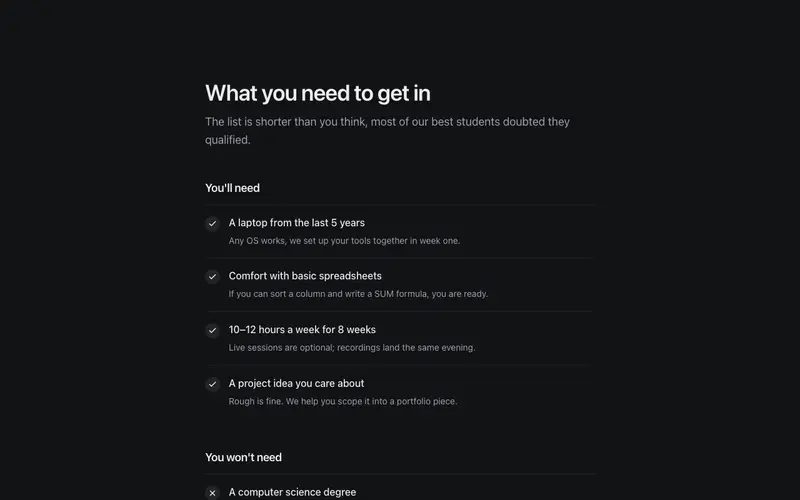
Admission Checklist
What you need to get in and what you can skip, admission requirements as an encouraging two-group checklist with real dl semantics. React and Tailwind block for course sites.
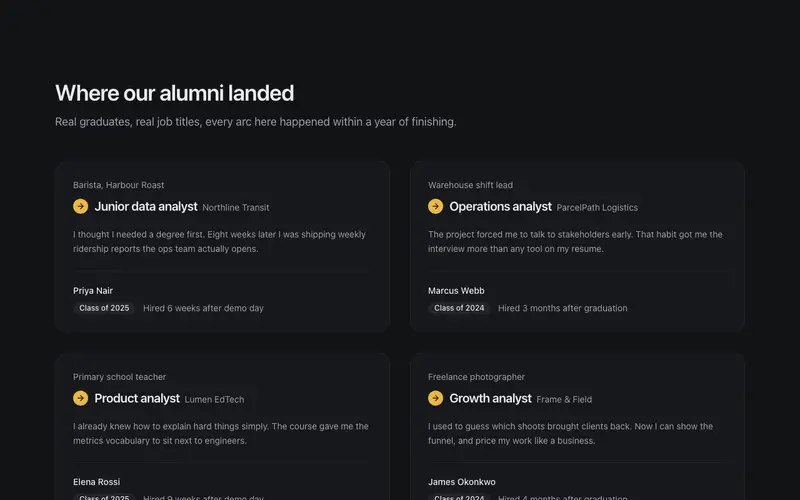
Alumni Story Cards
Graduate stories told as career arcs, from old job to new title, a short quote, cohort chip, and hired-in timeline. React and Tailwind alumni proof cards for course sites.
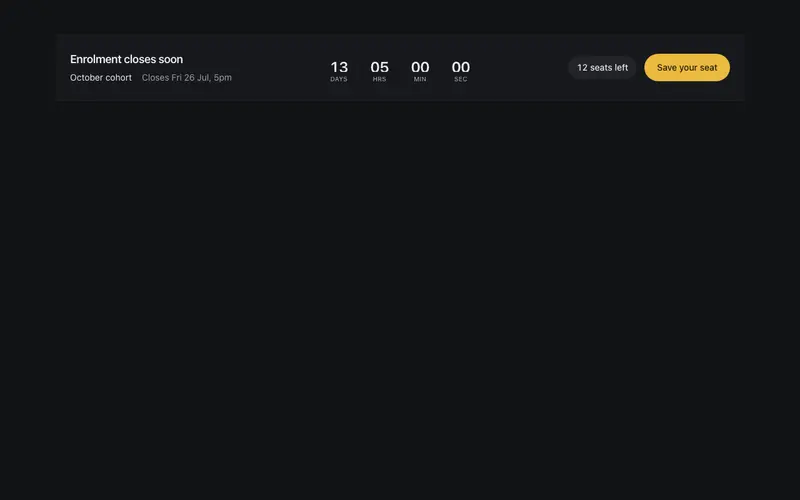
Cohort Countdown Strip
An enrolment-closing strip, seats left, a preformatted close date, and a compact rolling countdown pointing at one warm CTA. Encouraging urgency, not a fire alarm.
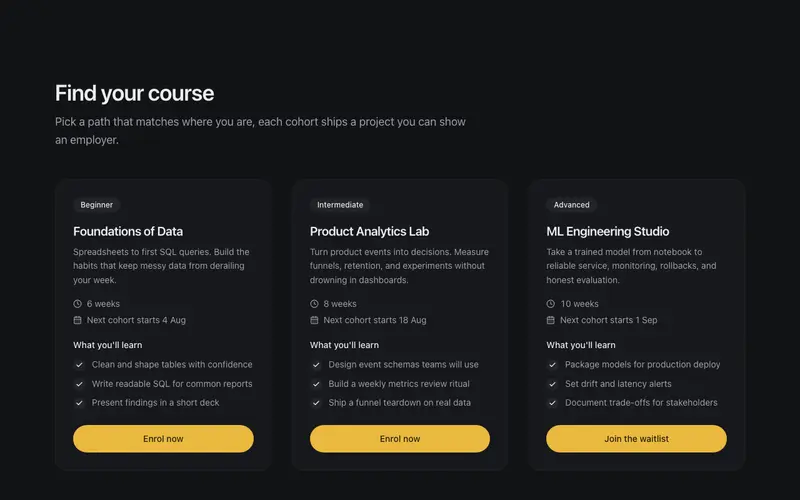
Course Card Grid
Friendly course cards with level chips, duration and next-cohort lines, outcome checklists, and one warm enrol CTA per card, the encouraging way a training site earns sign-ups.
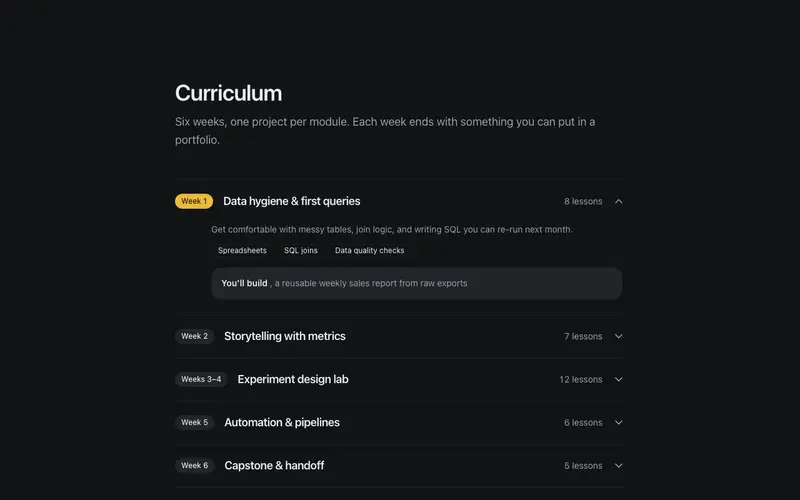
Curriculum Outline
A module-by-module curriculum accordion, week markers, lesson counts, and honest 'what you'll build' notes behind real disclosure semantics. A syllabus students can trust.
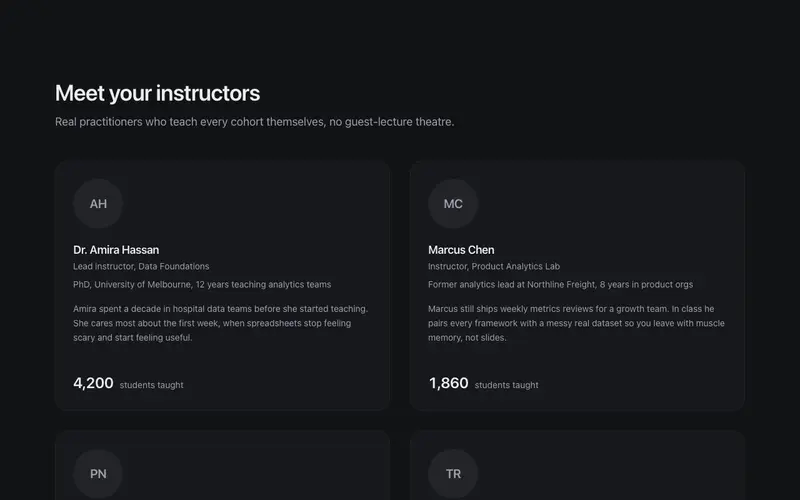
Instructor Panel
Educator bios that read like a good syllabus, plain-text credentials, an approachable register, and student-count tickers that prove the teaching miles without bragging.
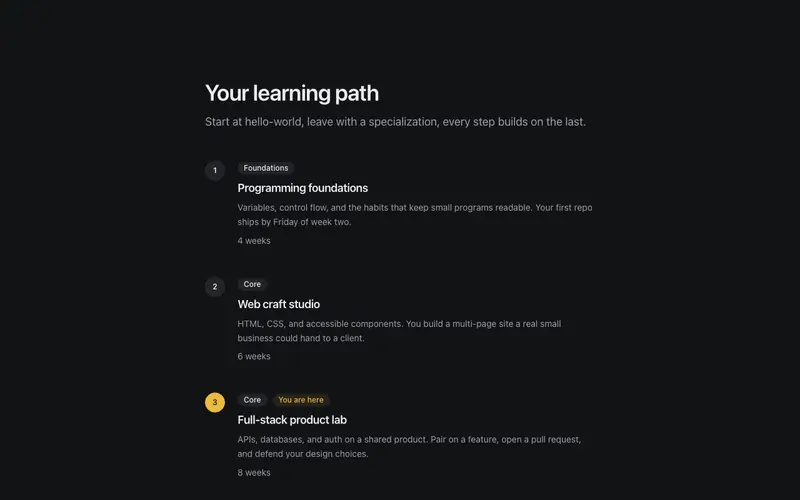
Learning Path Map
Courses drawn as one connected path, milestone nodes running from basics to specialization along a drawn spine, with a warm 'you are here' marker set by a prop.
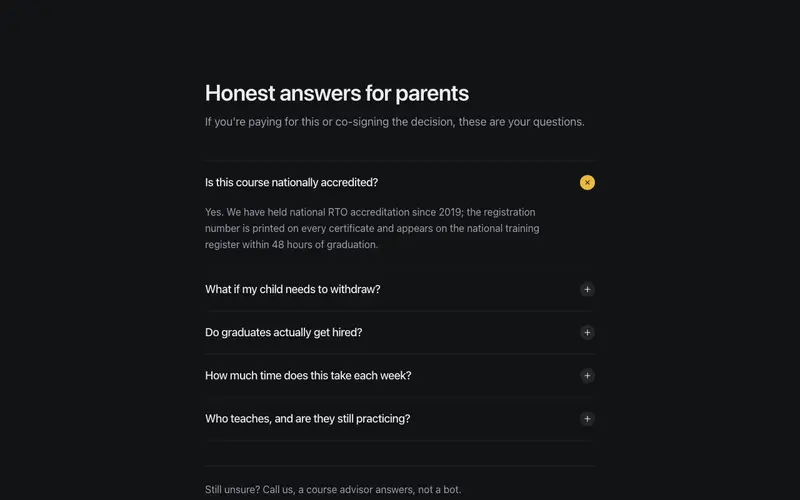
Parents FAQ
The questions parents and skeptics actually ask, accreditation, refunds, job outcomes, answered plainly behind real disclosure semantics, with a talk-to-a-human fallback.
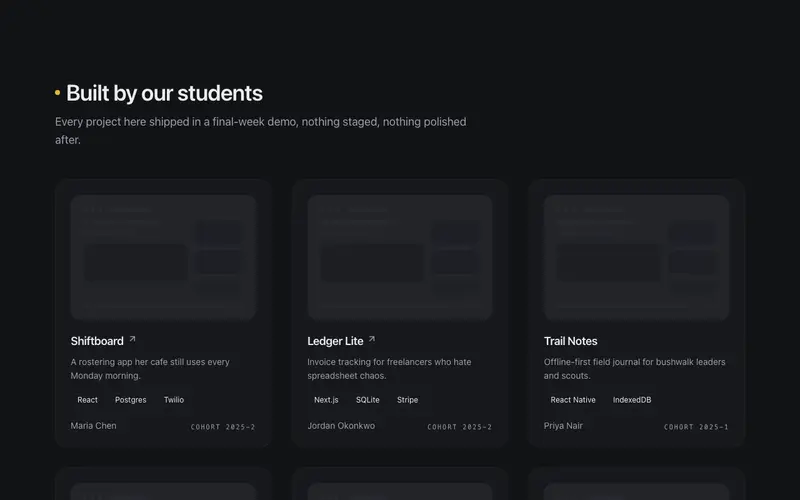
Project Showcase Grid
Student work in a celebration grid, project titles, one-line briefs, tools chips, and a mono cohort tag over structural placeholder panels. Proof that students actually ship.
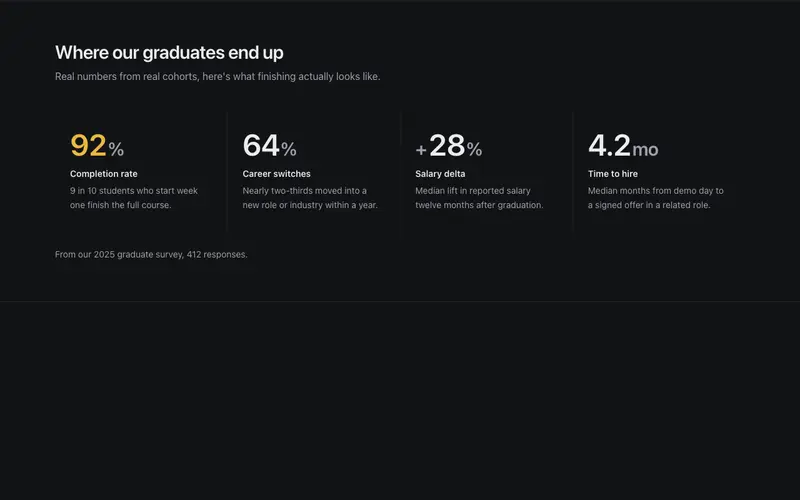
Student Outcomes Band
Outcome stats in the encouraging register, completion rate, career switches, and salary delta tick up once, each with a plain-language caption instead of a mono label.
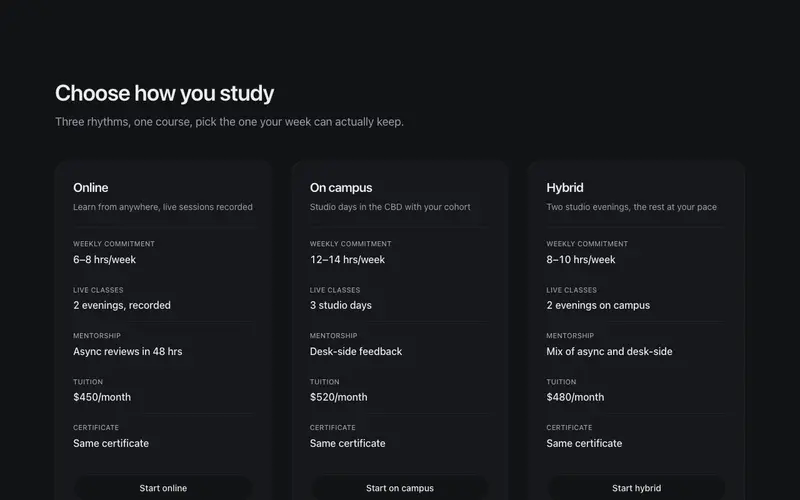
Study Mode Compare
Online, on-campus, and hybrid study modes compared dimension by dimension, with a same-certificate reassurance line. A React and Tailwind comparison block for education sites.
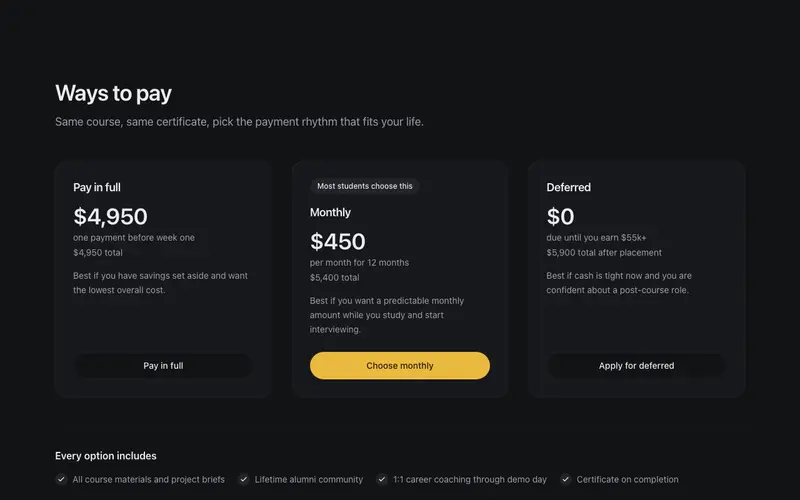
Tuition Payment Options
One course, three honest ways to pay, upfront, monthly, or deferred, with plain totals and a shared includes list. A React and Tailwind tuition block for course sites.
Frequently asked questions
Are these components suitable for universities and RTOs, or just online courses?
Both. The admission checklist, tuition payment options, and parents FAQ were written with formal providers in mind, while the cohort countdown and outcomes band suit online course creators. Tone is set by your copy; the structures are shared.
Can the curriculum outline handle a large syllabus?
Yes, it is built around collapsible modules with lesson counts and durations, so a 12-module program stays scannable. For multi-track programs, pair it with the learning path map, which shows how modules connect.
How do I show real student outcomes without overclaiming?
The student outcomes band is deliberately factual, completion rates, placement figures, review scores, with source lines under each stat. The alumni story cards carry the qualitative side. Keep claims verifiable; the layout rewards specifics.